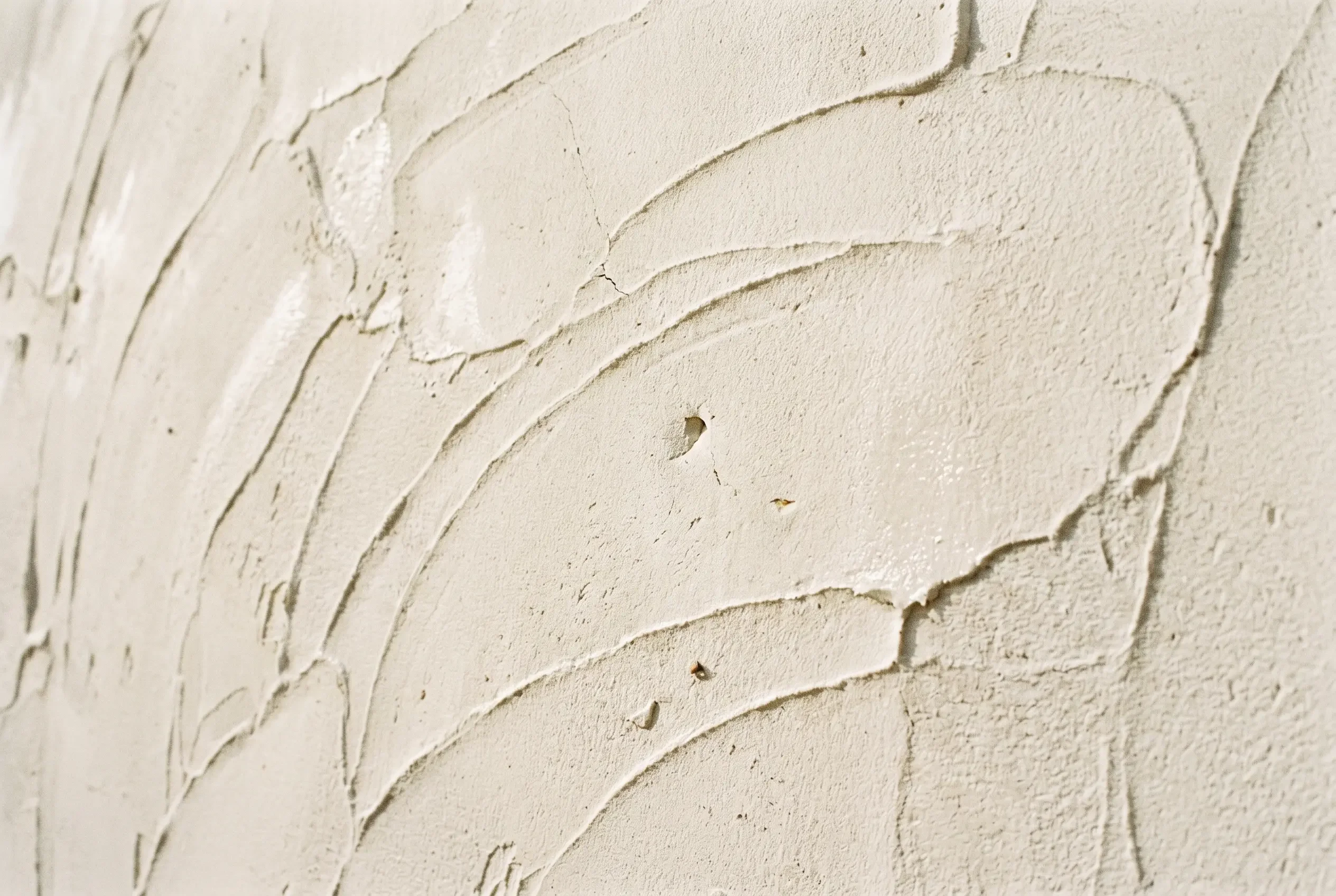
Lime has been produced in Andalusia for thousands of years and has been losing ground to cement for the past fifty. Coming back to it isn’t a romantic gesture: it’s a technical decision that improves the project.
Aged lime putty is a porous coating. It breathes. It absorbs humidity when there is some and releases it when the air dries. That means a limewashed wall regulates the indoor relative humidity without the need for any device. In an Andalusian summer, where the problem is not the cold but the muggy heat, a wall that breathes is a wall that cools.
Compared with cement or plastic plaster, lime has another property that matters: it ages well. The patinas left by time are part of the material, not flaws. A fifty-year-old lime wall is more interesting than a brand-new one. A fifty-year-old cement wall is, generally, a wall that needs repainting.
Working with lime demands hand. It cannot be applied with a roller or a spray gun. It is laid in thin coats, with a trowel, one over the next, letting each coat grip before the following one. In Casa entre cales we applied seven coats inside, five outside. It is slower, yes. It is also what lasts.
The applicators who knew how to lay lime by hand are retiring. There are fewer every year. In the Sierra de Cádiz two or three crews remain. Each time we finish a project with an older applicator, we know that crew may not be available for the next one. It’s one of the reasons we insist on lime: because if studios stop asking for it, the trade dies.
And if the trade dies, so does the lime.